FourColor Ink
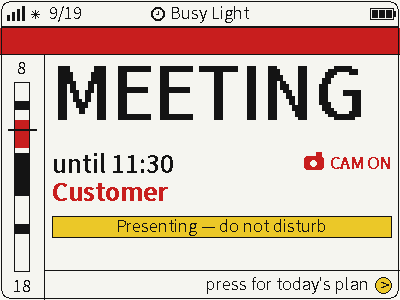
Switch between photos, weather and busy status on a four-color screen for glanceable desktop information.
USB firmware
View & install Views0

Device firmware · NOTE4C · Four-color
Put today's classes, school lunch, weather and tomorrow's bag checklist on one four-color screen.
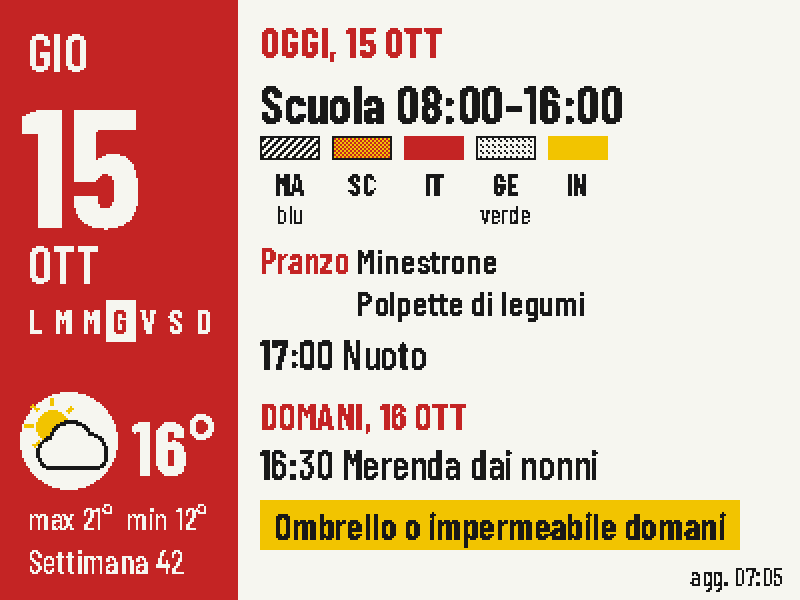
Put today's classes, school lunch, weather and tomorrow's bag checklist on one four-color screen.
Install & use
Connect the device and give AI the detection results together with this firmware information.
USB chip information cannot distinguish monochrome from four-color screens. Confirm the model first.
Read the chip and capacity first, so AI needs fewer follow-up questions.
Detection may restart the device into download mode. It does not flash firmware; you still need to confirm the display model.
Not detected yet. You can also copy the task first and ask AI to help connect.
Codex on your computer can install dependencies and run programs locally.
Check compatibility → Prepare firmware and a full backup → Assist with local installation → Verify first run
After copying, start a new chat in Codex on your computer and paste the task.
Only project information and the device details selected here are included. Network addresses, accounts and keys are configured locally during installation.
The device shows the expected Zaino School Planner screen and continues to work after repeated updates.
Ask AI to report the installation location, verification results and how to start again. Continue in the same conversation if something goes wrong.
NOTE4C · ESP-IDF 5.4 · Always-on Docker server · 2.4 GHz Wi-Fi
Deploy Docker on a NAS, mini PC or other always-on host. Use the mobile admin page to configure timetable, lunch, weather location and page schedules first.
Back up NOTE4C's complete 16 MB Flash. Follow upstream instructions to configure home Wi-Fi with the NOTE4C reference firmware first; Zaino reuses the saved credentials.
Your home server address must be added to the build configuration. Addresses differ between homes, so one unconfigured image cannot be shared directly.
Install your built image using upstream instructions while preserving settings, then confirm server access. The admin webpage has no login protection by default; use it only on a home network or VPN.
Information organized · Release version and installation await review. Generating a task does not send it or run an installation automatically.
Zaino's pages are generated by a server and fetched when the device wakes. An always-on Docker host is required for ongoing scheduled updates.
No. This project targets NOTE4C. Monochrome NOTE4 uses a different panel driver.
Switch between photos, weather and busy status on a four-color screen for glanceable desktop information.
USB firmware
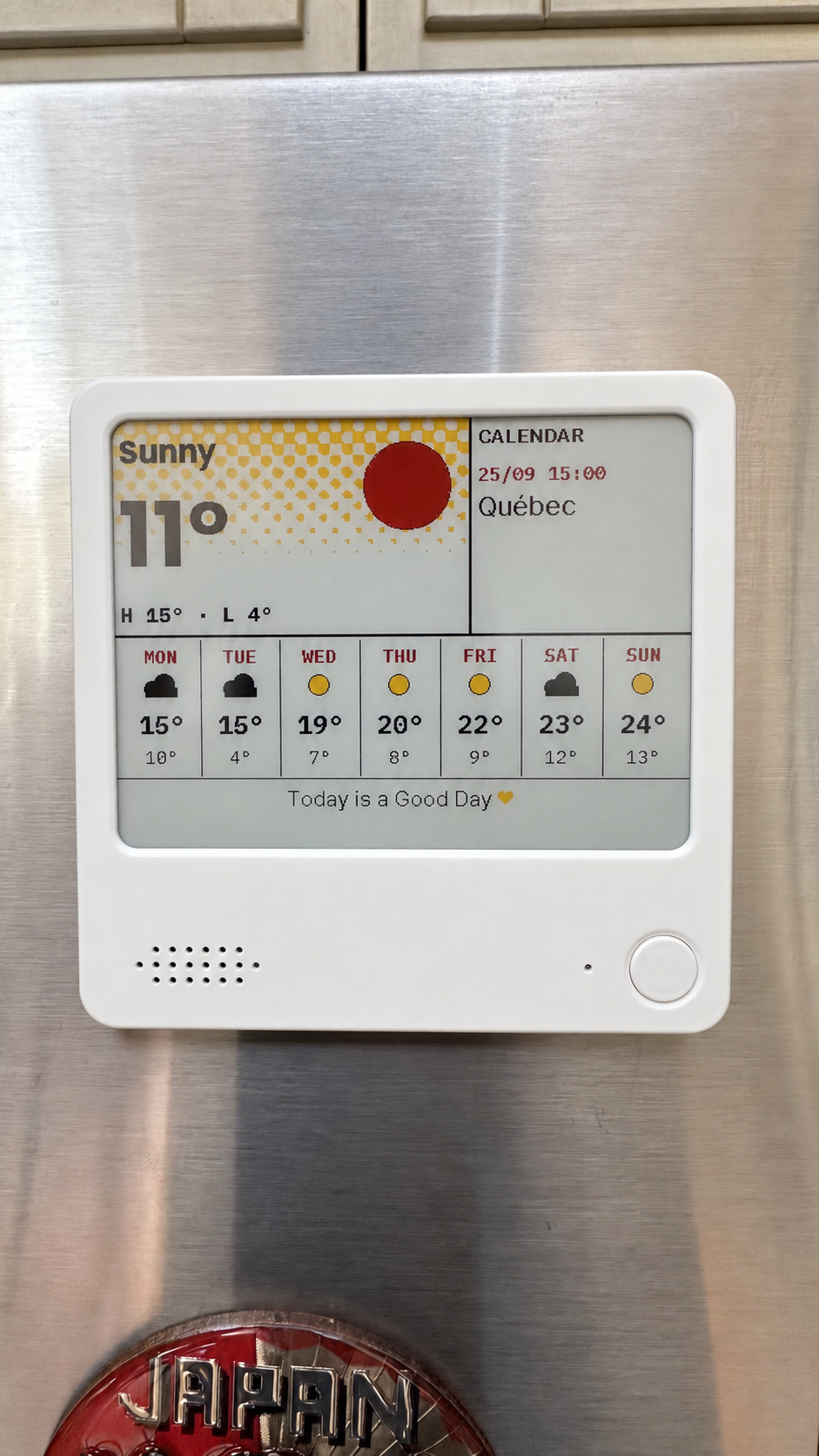
Compose weather, calendars, countdowns and notes on your computer, then send them to NOTE4C over your LAN.
Firmware + companion service
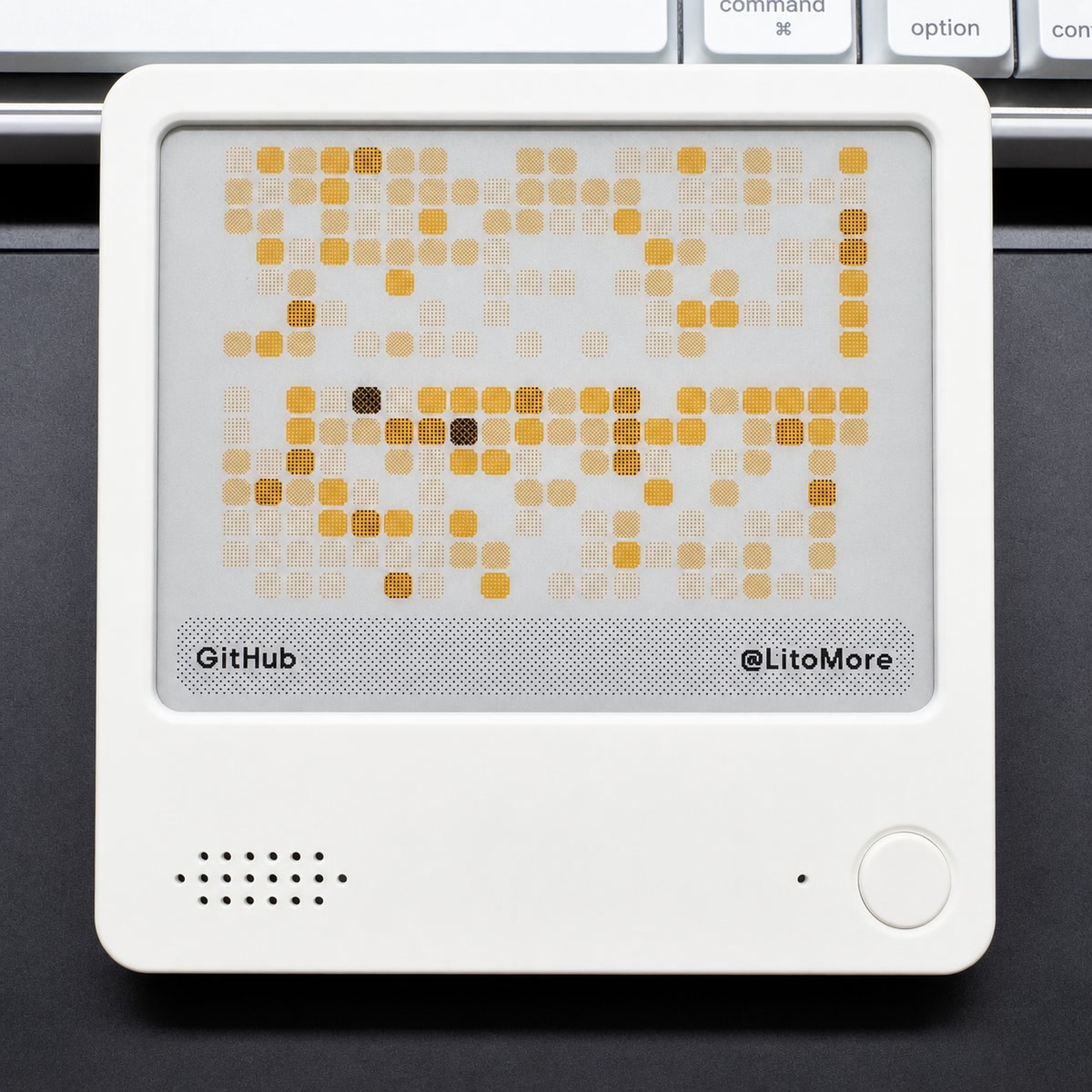
Bring TRMNL calendars, custom content and dashboards to your desk in black, white, red and yellow.
Firmware + companion service